

 Facebook
 X
X
 Pinterest
 Copy Link
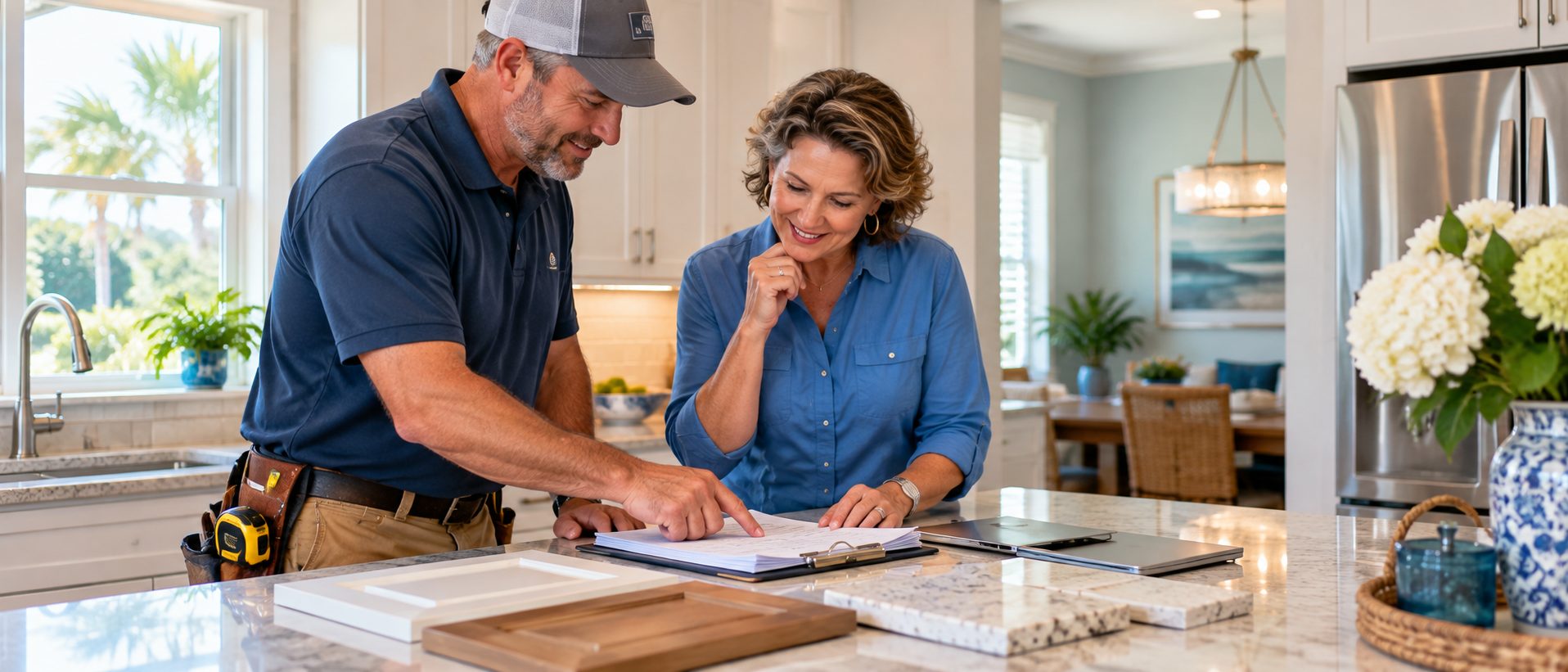
Almost every home has something that could use a little attention.
Maybe it’s a bathroom that hasn’t been updated in twenty years. A kitchen with perfectly good cabinets but dated countertops. A deck that’s showing its age. Or a list of small repairs you’ve been meaning to tackle for longer than you’d like to admit.
When homeowners start thinking about selling, those little projects suddenly become much bigger questions.
Should we fix it? Replace it? Update it? Leave it alone?
And the question I hear most often is, “Will I get my money back if I do this?”
The answer isn’t always simple.
I’ve helped homeowners work through everything from a few minor repairs to properties that needed considerable attention before they were ready for the market.
One thing I’ve learned is that the smartest preparation plan isn’t necessarily the one with the most improvements. It’s the one that makes the most sense for the property, the market, and the homeowner.
First, Separate What Needs Repair From What You’d Like to Improve
There’s a difference between something that isn’t working properly and something that’s simply showing its age.
A leaking faucet needs attention. A faucet that’s an older style may be perfectly functional.
Damaged flooring could be a concern. Flooring that’s clean and well maintained but not today’s most popular color may be another matter entirely.
Before making decisions, I like to separate projects into three groups:
Needs attention: Repairs, maintenance, or conditions that could affect safety, function, property condition, or a buyer’s confidence.
Worth considering: Cosmetic updates that might improve presentation or help a home compete with similar properties.
Probably unnecessary: Changes that are largely a matter of personal taste or are unlikely to justify their cost.
That last group is important.
Sometimes homeowners spend money because they think buyers expect everything to look new.
Most buyers understand they’re purchasing an existing home. What they want to know is whether it has been cared for and whether the asking price reflects its condition.
In fact, I wrote recently about how buyers notice the little signs of maintenance and care, sometimes more than the expensive finishes.
Don’t Assume a Renovation Will Pay for Itself
This is where I encourage homeowners to slow down.
It’s easy to watch a home improvement program or look at beautifully renovated listings online and start imagining what your own house could become.
But spending $20,000 on improvements doesn’t automatically mean your home will sell for $20,000 more.
Sometimes a renovation makes a meaningful difference in how buyers respond to a property. Sometimes it helps a home compete more effectively with others in its price range.
And sometimes it costs more than the market is likely to reward.
Before starting a major project, consider:
What are comparable homes offering?
Is this improvement expected in the property’s price range?
Will the work address a genuine concern or simply change the appearance?
How much will the project cost, including possible surprises?
How long will it take?
Would selling the property in its current condition be a reasonable alternative?
The answers may be different for an established home in Shalimar, a rental property in Fort Walton Beach, or a waterfront condominium in Destin.
That’s why I don’t believe in a one-size-fits-all renovation checklist.
The house and the market need to help make the decision.
Sometimes a Good Cleaning and a Few Repairs Are Enough
I’ve seen homeowners worry about outdated kitchens or bathrooms when the more important issue was simply getting the property back into good condition.
A thorough cleaning, some paint, properly functioning doors and fixtures, refreshed landscaping, and attention to deferred maintenance can make a substantial difference in how a home presents.
Not because you’ve made it look brand-new.
Because you’ve removed the distractions that were keeping buyers from seeing what the home already offers.
Established neighborhoods around Fort Walton Beach and Shalimar have plenty of homes with character, mature landscaping, and features that aren’t necessarily found in newer construction.
Those qualities can be assets.
We don’t always need to erase the age of a home. We need to understand which signs of age matter and which are simply part of the property.
That’s one reason I encourage homeowners to start preparing before a move becomes necessary. It gives us time to evaluate projects rather than making expensive decisions under pressure.
When the Work Gets Complicated, Someone Has to Keep It Moving
Now, this is an area of real estate I know pretty well.
Over the years, I’ve worked with properties that needed more than a quick cleaning and a fresh coat of paint.
Sometimes the owners lived out of town. Sometimes a property had been rented for years and needed attention before it could be sold. Other times, a homeowner was dealing with a life transition and simply couldn’t manage all the details.
And those details can add up quickly.
Contractors need access. Materials have to be selected. Estimates need to be reviewed. Work needs to be scheduled. Someone has to check on progress, communicate with the owner, and make sure the next step isn’t waiting on something that should have happened last week.
A project that sounds simple on paper can become complicated when several people and schedules are involved.
I’ve found myself doing quite a bit of coordinating in situations like these.
Not because every real estate transaction requires that level of involvement, but because sometimes helping a client means recognizing what needs to happen and helping them figure out how to get it accomplished.
And yes, I like having a plan.
Preferably one with a checklist.
The important thing is that the homeowner understands the decisions being made, the costs involved, and who’s responsible for each part of the work.
Good coordination doesn’t replace good contractors or careful decisions. It helps keep everyone working toward the same goal.
Out-of-Town Owners Have a Different Set of Challenges
Preparing a property can be difficult enough when you live twenty minutes away.
It’s another matter when you live in another state.
You may not be able to meet a contractor at the house, check whether materials have arrived, or see how a repair turned out.
And if the property has been vacant or rented, there may be issues you haven’t seen firsthand.
In those situations, I think the first step is understanding the condition of the property before deciding how much work makes sense.
That may involve inspections, estimates from qualified professionals, conversations about the property’s likely market position, and a realistic budget.
Then we can discuss whether repairs or updates are worthwhile, what the owner is comfortable undertaking, and what assistance may be available.
Sometimes the best solution is to complete the necessary work.
Sometimes it’s to make a few improvements and stop.
And sometimes it’s to sell the property in its present condition with appropriate pricing and disclosures.
The goal is to make an informed decision—not to create a renovation project simply because the house needs work.
Know When to Stop
This may be one of the most valuable pieces of advice I can give a seller.
There comes a point when another improvement isn’t necessarily going to make the property more appealing or produce a better financial result.
You can keep replacing things.
You can keep upgrading finishes.
You can keep finding projects.
Most homeowners can walk through their house and identify something else they’d like to do.
But preparing a property for sale is different from renovating it for your own enjoyment.
When you’re improving a home for yourself, you may decide that the pleasure of having something exactly the way you want it justifies the expense.
When you’re preparing to sell, we need to look at the numbers, the competition, the time involved, and what buyers are likely to value.
And sometimes my recommendation is simply:
I think we’ve done enough.
That’s not always the most exciting advice.
But it may be the right advice.
Let’s Look at the House Before You Start Spending
If you’re thinking about selling a home in Fort Walton Beach, Shalimar, Niceville, Destin, or the surrounding area, you don’t have to figure out every repair or improvement on your own.
And you certainly don’t need to start renovating before we’ve had a conversation.
I’d much rather walk through the property with you, look at what needs attention, and help you decide where your time and money are likely to make the biggest difference.
Some homes need a lot of work.
Some need very little.
And some need an honest conversation about whether the work is worth doing at all.
That’s where a good plan starts.
If you’re considering selling, we can talk through your property’s condition and your options before you commit to a project.
Nance Wendel
REALTOR® | ERA American Real Estate
On It — Practical Real Estate Guidance for Fort Walton Beach & Shalimar
