

 Facebook
 X
 Pinterest
 Copy Link
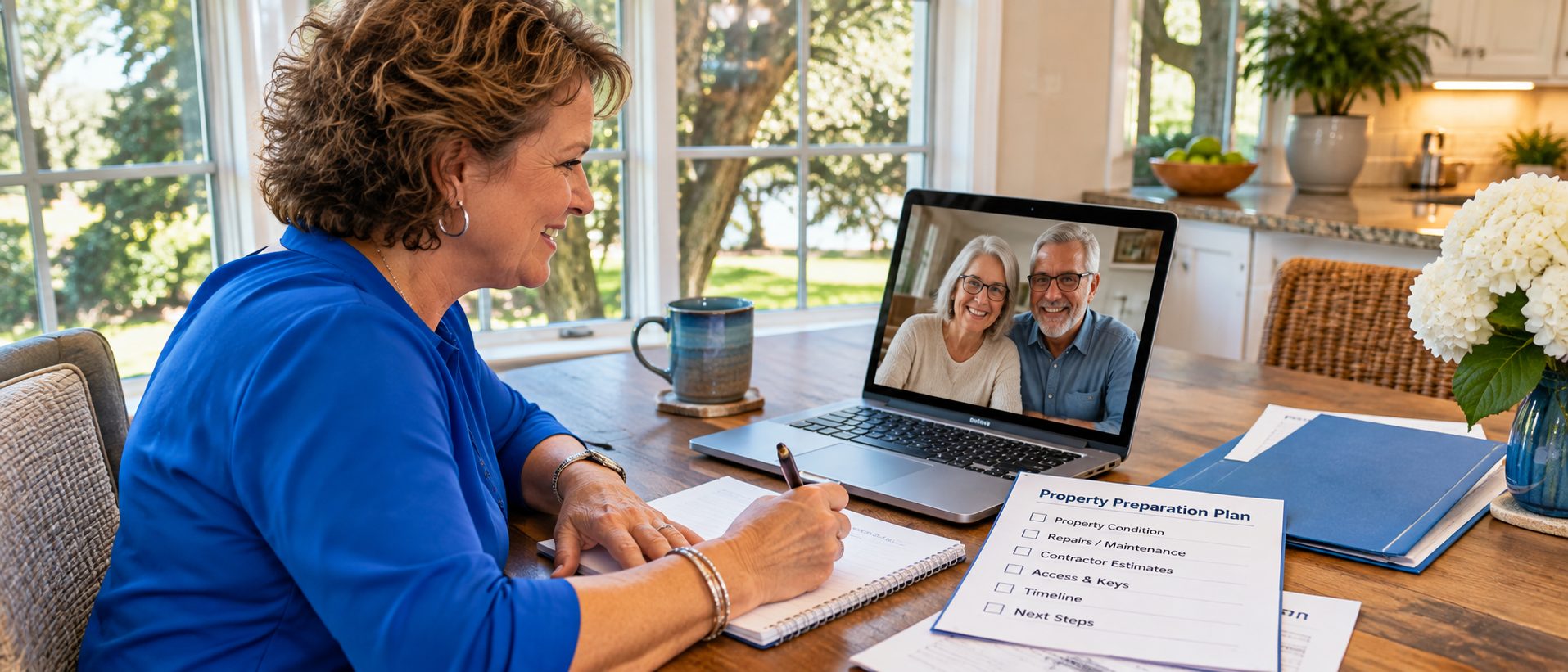
Selling a home can involve quite a few moving parts, even when you live right down the street.
Now imagine you’re trying to do it from another state.
Maybe you kept your Northwest Florida home as a rental after moving away. Perhaps you’ve inherited a property in Fort Walton Beach or Shalimar. Or maybe a job transfer took you somewhere else before you had a chance to sell.
Whatever the circumstances, the house is still here, you’re somewhere else, and there are decisions to make.
The good news is that you don’t necessarily have to travel back and forth every time something needs attention.
But you do need a plan.
I’ve worked with owners who couldn’t be here to manage every detail of preparing their properties for sale. And one thing I’ve learned is that the first step isn’t necessarily fixing the house or putting it on the market. It’s figuring out exactly what needs to happen, who’s responsible for it, and in what order.
That’s where we start.
First, Find Out What You’re Working With
When you haven’t lived in a property for a while, you may not know its current condition as well as you think.
If it’s been rented, there may be maintenance issues that weren’t obvious during routine property management. If it’s been vacant, even small problems can develop while no one’s checking on things regularly.
And if you’ve inherited the home, you may be starting with very little information at all.
Before making plans, I want to understand the property.
That might mean arranging access, reviewing available maintenance records, obtaining appropriate professional evaluations, and identifying obvious issues that need attention.
A few questions worth answering:
Is the property vacant, occupied, or rented?
Who currently has keys and access?
Are utilities and insurance active?
Are there known maintenance or repair issues?
What do we know about the roof, HVAC, plumbing, and other major systems?
Are there belongings, furniture, or other items that need to be removed?
Are there HOA or condominium association requirements to consider?
We don’t need to solve every problem immediately.
We need to know what we’re dealing with before deciding what comes next.
Decide What Actually Needs to Be Done
Once we understand the property’s condition, we can start talking about preparation.
This is where some owners get overwhelmed.
They know the house needs work, but they’re not sure how much. Should they replace the flooring? Update the kitchen? Paint everything? Make repairs? Sell it as-is?
And when they’re hundreds of miles away, every project can feel twice as complicated.
I don’t believe in automatically recommending a long list of improvements.
Some repairs may be necessary to address safety, function, or property condition. Other updates might help the home compete more effectively with similar properties. And some projects simply aren’t worth the expense.
In my recent article, When a Home Needs Work, How Do You Decide What’s Worth Doing?, I explained why the smartest preparation plan isn’t always the one with the most improvements.
That same principle becomes even more important when you’re managing a property from a distance.
Every project has a cost, a timeline, and someone who needs to oversee the details.
Sometimes a thorough cleaning, a few repairs, and attention to the landscaping are enough.
Sometimes more work makes sense.
And sometimes selling the home in its present condition is a reasonable option.
The right answer depends on the property, the market, and your circumstances.
Someone Has to Keep Track of the Details
This is the part that doesn’t always show up in conversations about selling real estate.
Let’s say you’ve decided to have the house painted, replace some damaged flooring, and take care of a few maintenance items.
That sounds manageable.
But someone needs to obtain estimates. Contractors need access. Materials may need to be selected. Work has to be scheduled. And if one project depends on another being finished first, the order matters.
Then there are questions.
Which flooring? What paint color? Did the contractor find another issue? Is the work finished? Does someone need to check on it?
I’ve been involved in transactions where helping an owner meant coordinating quite a few of those moving pieces.
And yes, this is where my love of spreadsheets comes in handy.
I like knowing what’s been discussed, what’s been approved, who’s doing the work, and what still needs attention.
That doesn’t mean every seller needs a complicated project-management system.
It means someone needs to know what’s happening—and the owner needs to be kept informed.
Qualified contractors and other professionals remain responsible for their work. My role is to help clients understand the real estate decisions, communicate with the people involved, and coordinate agreed-upon steps when that assistance is part of our plan.
Good communication can prevent a lot of unnecessary frustration.
Especially when you can’t just drive over to the house and see what’s going on.
Establish Who Can Make Decisions
When you’re selling from a distance, it’s important to be clear about who has the authority to approve work, sign documents, and make decisions.
For a typical owner, that may be straightforward.
For an inherited property, trust, estate, or jointly owned home, it may require additional conversations and documentation.
I have experience helping clients navigate the real estate side of probate-related transactions, and I’ve seen how important it is to understand these responsibilities early.
A real estate agent can help with property-related decisions, but questions about legal authority, estate administration, and required documents belong with the appropriate attorney or other qualified professional.
It’s much better to identify those questions before scheduling work or making commitments.
The same goes for property access and occupancy.
If the house is rented, we’ll need to account for the lease, tenant rights, required notices, and appropriate arrangements for access.
If it’s part of a condominium association, there may be additional procedures or documents involved.
A little clarity at the beginning can save a great deal of confusion later.
You Can Handle More Remotely Than You Might Think
Technology has made many parts of selling a home from another location easier.
We can discuss market conditions by phone or video, review comparable properties, exchange documents electronically when permitted, and share photos or videos as part of the preparation process.
Depending on the transaction, title company procedures, lender requirements, and applicable rules, closing arrangements may also be available without the seller traveling back to Northwest Florida.
But I wouldn’t assume that everything can automatically be handled remotely.
Some documents may require particular signing or notarization procedures. Some properties need professional inspections or evaluations. And some situations simply benefit from having the right person physically present.
The goal is to determine which steps can be handled from where you are and which require local assistance.
Then we plan accordingly.
Don’t Forget the Costs of Keeping the Property
When owners are focused on getting a home ready to sell, it’s easy to concentrate on repair expenses and overlook the ongoing costs of ownership.
Mortgage payments, taxes, insurance, utilities, lawn maintenance, association fees, and other expenses don’t stop just because the property is vacant or you’re living somewhere else.
If you’re considering a substantial renovation, those carrying costs become part of the decision.
Will the work meaningfully improve the home’s market position?
How long might it take?
What happens if the project costs more than expected?
And would a different preparation or pricing strategy make more financial sense?
These aren’t always easy questions, but they’re worth discussing before committing to a project.
I’ve always believed that the best home decisions usually aren’t made in a hurry. That applies just as much to selling as it does to buying.
Make the Plan Before You Make the Trip
If you live outside Northwest Florida and are considering selling a property here, you may be wondering whether you need to fly or drive back to get everything started.
Not necessarily.
I’d rather begin with a conversation about the property and your circumstances.
What do you know about its condition? Is anyone living there? Are there repairs you’re concerned about? Do you have a particular timeline? Are there legal, financial, or family considerations that could affect the sale?
From there, we can identify what information is missing and what needs to happen next.
You may decide a visit is worthwhile.
Or we may be able to accomplish quite a bit before you ever make travel arrangements.
Either way, having a plan makes the process easier to manage.
You Don’t Have to Be Here to Start the Conversation
Selling a home from a distance doesn’t mean every detail will be simple.
Sometimes unexpected repairs come up. Sometimes schedules change. Sometimes a property needs more attention than anyone anticipated.
But you don’t have to figure out the entire process before asking for help.
If you own a home in Fort Walton Beach, Shalimar, Niceville, Destin, or the surrounding area and you’re trying to decide what to do with it from somewhere else, I’m happy to talk through the situation with you.
We’ll start with what you know, identify what needs attention, and work out a sensible next step.
You may be miles away, but you don’t have to make every decision on your own.
Nance Wendel
REALTOR® | ERA American Real Estate
On It — Practical Real Estate Guidance for Fort Walton Beach & Shalimar
