

 Facebook
 X
X
 Pinterest
 Copy Link
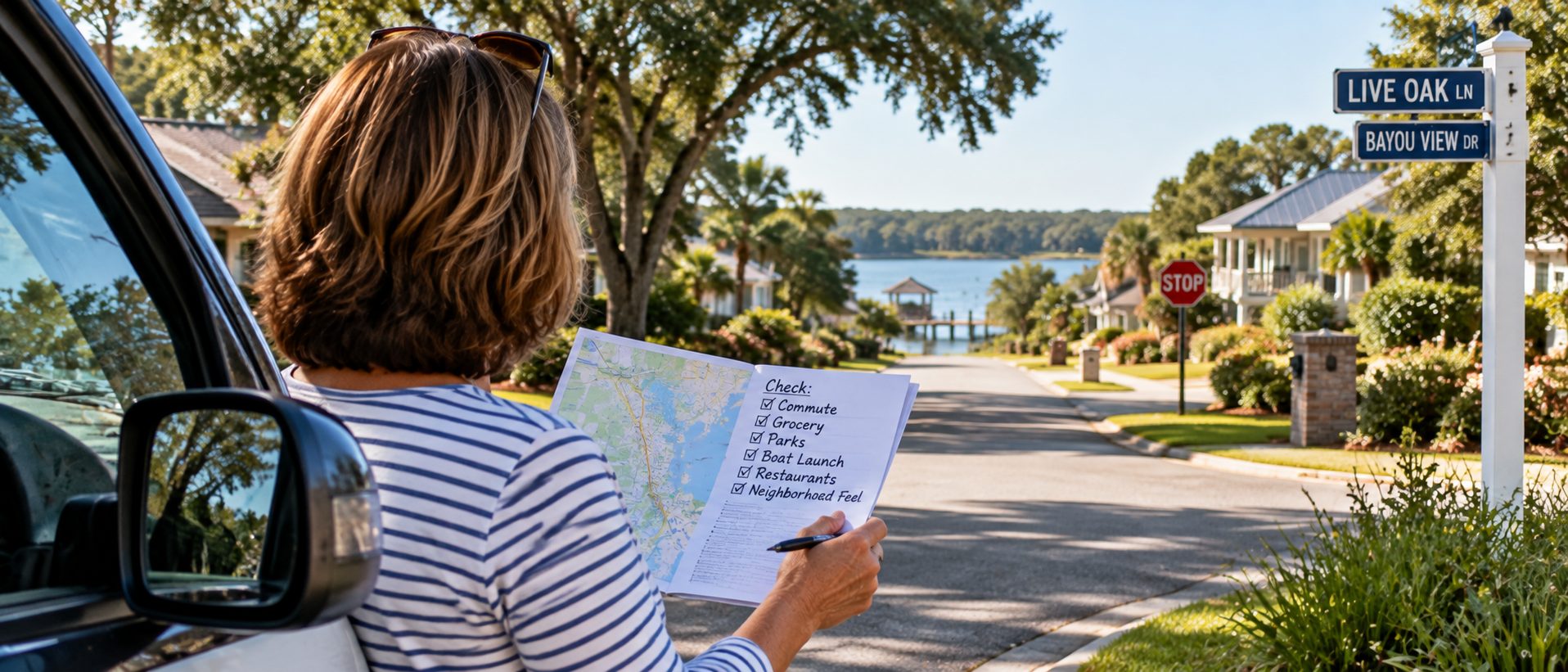
Most buyers spend a great deal of time examining the house they may purchase. They open cabinets, measure rooms, study the roof, inspect the yard, and decide where the furniture might go.
That is all important.
But once you’ve found a house you seriously like, I recommend spending some time investigating everything outside of it, too.
Think of it as test-driving the neighborhood.
You aren’t trying to find a community where nothing ever changes or where every detail is perfect. You’re trying to understand what everyday life might actually look like there before you make a decision.
If you’re still deciding which type of community best fits your lifestyle, I wrote more about that in what makes a neighborhood feel like home.
Visit More Than Once
A neighborhood can feel very different depending on when you visit.
A quiet street at 11:00 on a Tuesday morning may become much busier when residents return from work. A peaceful Saturday afternoon may not reveal weekday school traffic, delivery vehicles, nearby construction, or activity from a business around the corner.
If you’re seriously considering a home, visit the area at several different times.
☐ Morning commute
☐ Late afternoon
☐ After dark
☐ Weekend
Pay attention to traffic, lighting, road noise, parking, walkers, pets, and how residents use their properties.
Notice whether the street feels active or quiet.
Neither is automatically better. Different buyers want different things.
Actually Drive the Commute
Don’t rely only on a map showing the distance between the house and your workplace.
Drive the route at the time you would normally travel it.
This is particularly useful in Northwest Florida, where a relatively short distance may include base traffic, a bridge, a busy section of Highway 98, or seasonal congestion near the beaches.
The important number isn’t always the number of miles.
It’s what those miles feel like when you’re driving them twice a day.
Run an Ordinary Errand
Here’s another test that’s easy to overlook.
Spend a little time living as though you already own the house.
Drive from the neighborhood to somewhere you’d actually go:
☐ Grocery store
☐ Pharmacy
☐ Gym
☐ Medical office
☐ Childcare
☐ Favorite restaurant
☐ Boat launch
☐ Other regular activity
A location may look convenient on a map but feel less convenient once you experience the roads and traffic patterns.
This isn’t about deciding whether a neighborhood is conveniently located in general.
It’s about whether it’s conveniently located for you.
That’s an important distinction.
Explore What You’d Actually Use
A neighborhood should support more than work and errands.
If you enjoy walking, look for routes you would actually use.
If you have children, visit nearby parks and recreation areas.
If boating or fishing is important, investigate water access rather than assuming it’s convenient.
If you have a dog, consider the yard, traffic, sidewalks, and places where you’d comfortably walk.
Walkability means different things to different people, too. One buyer may want to walk to restaurants and shops. Another simply wants a pleasant place to walk the dog without dealing with heavy traffic.
The goal isn’t to create a universal neighborhood checklist.
It’s to investigate the things that matter to your everyday life.
Seeing beyond the listing photos is just as important outside the home as it is inside.
Talk With People Who Live There
When the opportunity arises naturally, speaking with residents can provide useful firsthand information.
You might ask how long they’ve lived there, what they enjoy about the area, or what they wish they’d known before moving in.
Ask open questions and listen carefully.
One person’s complaint may be completely unimportant to you, while a casual comment may identify something you’d like to investigate further.
Just remember that one resident represents one opinion.
Use conversations as one source of information, not the final answer.
For schools, public safety information, planned road projects, flood considerations, zoning, and future development, consult the appropriate official sources. Details can change, and buyers should verify information that’s important to their decision.
Look Beyond the Model Home
New construction deserves a slightly different kind of neighborhood test-drive.
The model home may be beautiful. The surrounding community, however, may still be taking shape.
Drive beyond the model.
Look at:
☐ Roads and access
☐ Drainage
☐ Sidewalks
☐ Construction activity
☐ Open land
☐ Completed sections
☐ Routes into and out of the development
A neighborhood that’s mostly dirt and construction activity today may look completely different several years from now.
But you’re buying into the community that exists now, along with whatever its future may become.
Ask what’s planned, what’s been approved, and what remains uncertain. Then verify information that’s important to your decision whenever possible.
Make Your Own Neighborhood Test List
Before your next visit, take five minutes and write down the things that would affect your everyday life.
Not somebody else’s list.
Yours.
Maybe it’s:
☐ A 20-minute commute
☐ Easy access to Eglin or Hurlburt
☐ A place to launch the boat
☐ Somewhere pleasant to walk
☐ Reasonable access to Highway 98
☐ Restaurants nearby
☐ A quieter street
☐ Room for a dog
☐ Less yard to maintain
☐ Convenient medical care
Then go test those things.
This is where a homebuyer’s checklist becomes more useful when it’s tailored to the way you actually live.
Give Yourself Time to Pay Attention
Exploring an area doesn’t guarantee you’ll uncover every possible surprise.
It does give you more information than you can gather during one showing.
Drive the neighborhood. Test the commute. Run an errand. Visit after dark. Look at nearby parks, businesses, and roads. Speak with residents when appropriate, and verify important information through reliable sources.
A few extra visits may help you understand not only whether you like the house—but whether you’ll like the life that comes with it.
And the best home decisions usually aren’t made in a hurry.
If you’re considering a Northwest Florida neighborhood and want help deciding what you should investigate, feel free to reach out with your questions. I’m always happy to help you build a practical list based on the way you actually live.
