

 Facebook
 X
X
 Pinterest
 Copy Link
A buyer can become attached to a house in about five minutes.
Maybe it has the kitchen they wanted, a great primary suite, a big yard, or finishes that make everything feel new. That excitement is real, but it can also make people overlook what surrounds the house.
You can change paint, wallpaper, flooring, fixtures, and even the floor plan if the budget allows. What you cannot easily change is the home’s location. That is why choosing a community is often just as important as choosing the house itself.
The things that matter most in a home aren’t always on the listing, and the same is true of the neighborhood around it.
Start With the Reason You Are Buying
Before concentrating on bedrooms, countertops, or square footage, think about why you are buying.
Are you trying to shorten your commute? Do you need more space for children or pets? Do you want to be closer to family, medical care, the water, or the activities you enjoy? Are you hoping to reduce home maintenance as you get older?
The motivation behind the purchase helps identify which compromises make sense. That matters in Northwest Florida because we do not always have a large supply of homes matching every buyer’s wish list in every neighborhood.
Sometimes a buyer knows exactly which community they want, but the right type of house is not available there. We may need to expand the search while keeping the buyer’s most important priorities intact.
The goal is not to find a house with absolutely everything. Those are rare. The goal is to understand what can be changed, what cannot be changed, and what will affect daily life the most.
That’s also why I believe the best home decisions usually aren’t made in a hurry. Giving yourself time to understand your priorities gives you more room to make the right compromises.
Think About an Ordinary Tuesday
People often picture weekends when choosing a neighborhood. They think about boating, beach days, restaurants, and backyard cookouts.
Those things matter, but I also encourage buyers to picture an ordinary Tuesday morning.
How long will it take to get to work? Where will you buy groceries? How far away are your doctor, dentist, school, childcare, or favorite activities? Will crossing a bridge or traveling along Highway 98 be part of your daily routine?
I live in Shalimar because it puts me near nearly everything I regularly do. From my neighborhood, I can reach Fort Walton Beach, Niceville, Eglin Air Force Base, Hurlburt Field, the beach, and Destin without making every outing an all-day production. My doctor is in Fort Walton Beach, my dentist is in Niceville, and my hair appointment takes me toward Mary Esther. All of those trips are manageable from where I live.
That central location fits my life. Someone else may gladly accept a longer drive in exchange for a newer house, more acreage, or a different coastal lifestyle.
Test the Commute Before You Commit
I always recommend driving through an area after dark and again during the morning commute.
After living in the Washington, D.C. area for 25 years, I admit that Northwest Florida “rush hour” can sound a little funny to me. Still, local congestion can absolutely affect how someone feels about a location, especially when that drive happens twice every workday.
I once worked with a couple who loved a home in North Crestview. They liked the house, the neighborhood, and the overall feel of the community. What they did not want was the daily commute to Eglin during normal work hours.
They ultimately chose an older, smaller home in Niceville. The house required a compromise, but the location worked better for the life they actually lived. They are happy there, which tells me they made the right decision for themselves.
This is exactly why I encourage buyers to look beyond the listing photos and experience both the home and its surroundings for themselves.
Every Area Has Its Own Tradeoffs
There is no single Northwest Florida community that is right for everyone.
Shalimar and Niceville provide convenient access to Eglin for many residents. Crestview has historically offered somewhat more affordable options and continued access to new construction. Freeport also continues to grow and offers newer housing choices.
Destin, Miramar Beach, and the communities farther east offer a different lifestyle. For some buyers, being closer to beaches, boating, restaurants, and coastal activity is worth the summer traffic. For others, that seasonal congestion becomes frustrating.
I have sold many homes in Navarre, and I genuinely love the area. It simply places me too far west for the things I regularly need to do toward Shalimar, Fort Walton Beach, Niceville, and Destin.
That is the point. A community can be wonderful and still not fit your particular routine.
Look Beyond the Finished House
New construction can be especially enticing. Everything is clean, modern, and untouched. However, a developing neighborhood may still have dirt, gravel, construction traffic, and very few established trees. It can be difficult to know what the finished community will eventually feel like.
Some families hope to find playmates nearby for their children. Some couples want quiet. Other buyers care more about sidewalks, parks, boating access, restaurants, local businesses, or enough yard for a pool.
Schools may also be important, but buyers should research attendance zones, programs, transportation, and other school information directly through the appropriate school district. What matters to one family may be very different from what matters to another.
Do not let paint or wallpaper eliminate an otherwise workable house. Those are among the easiest things to change. Pay closer attention to the lot, traffic, nearby activity, commute, and access to the places that shape your life.
Pay Attention to How a Neighborhood Feels
A neighborhood is more than its houses.
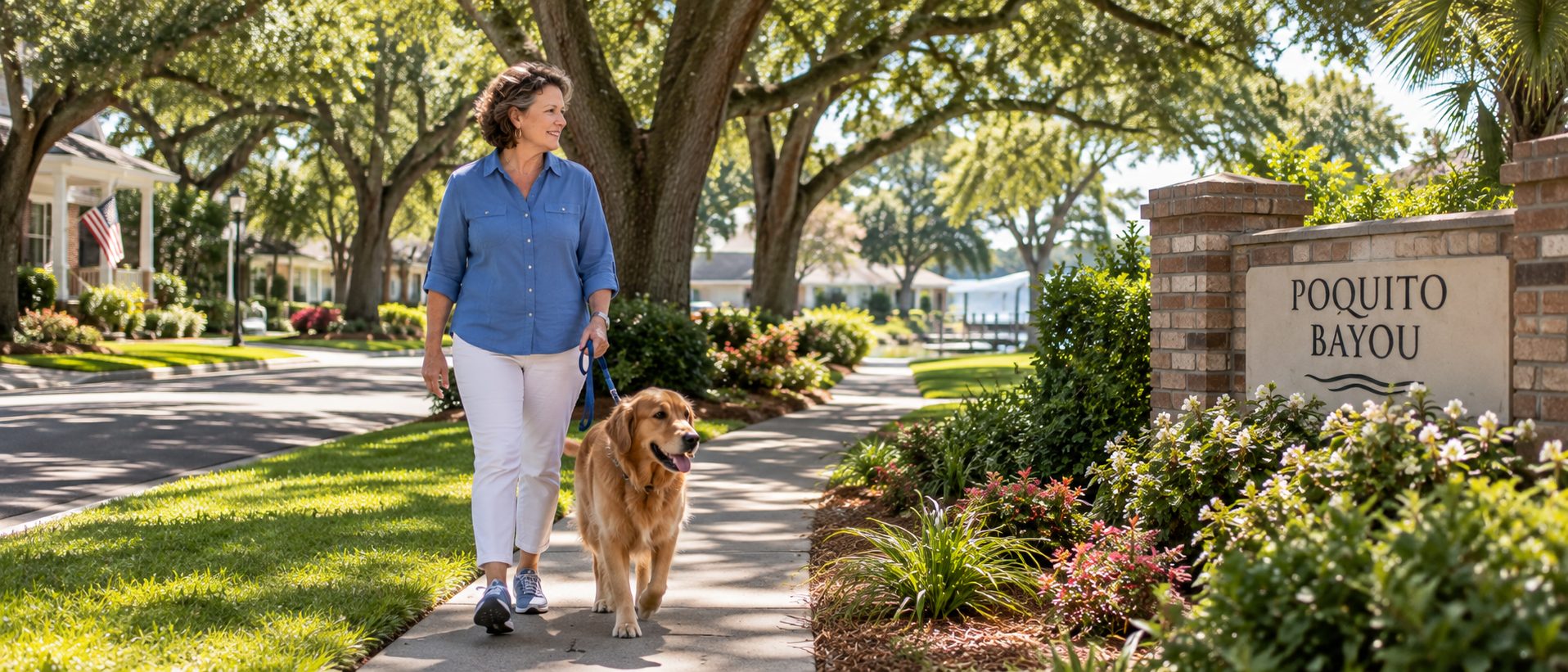
In Poquito Bayou, I appreciate the nicely sized lots. There is room for pools and outdoor living, but the properties are still manageable to maintain. The homes are not packed so closely together that neighbors can see directly into one another’s windows.
We have Leo Norred Park, community events supported by local volunteers, a nearby boat ramp, plenty of walkers to wave to, and some very good dogs with equally good owners.
I also feel comfortable here. Occasionally, we realize at bedtime that we forgot to close the garage door. We feel silly, but not fearful.
That sense of belonging developed over time. Years ago, I thought we might eventually retire to a waterfront community west of Mary Esther. Now, I am not convinced we will ever leave Poquito Bayou.
Choose for Today and Think About Tomorrow
The right neighborhood should work for your present life, but it is wise to look a few years ahead.
Will the commute still make sense? Could you maintain the yard? Is the home’s layout likely to work if your family changes or mobility becomes an issue? Would you still enjoy the location if your job, school schedule, or recreational priorities changed?
No house or neighborhood will meet every possible need forever. A thoughtful choice, however, can reduce the number of compromises that become daily frustrations.
If you’re still early in the process, The Florida Homebuyer’s Checklist can help you think through the other practical pieces that come between beginning your search and closing day.
If you are comparing Northwest Florida communities and want help thinking through the practical differences, feel free to reach out with your questions. I am always happy to share what I know and help you identify the factors worth investigating for yourself.
