

 Facebook
 X
X
 Pinterest
 Copy Link
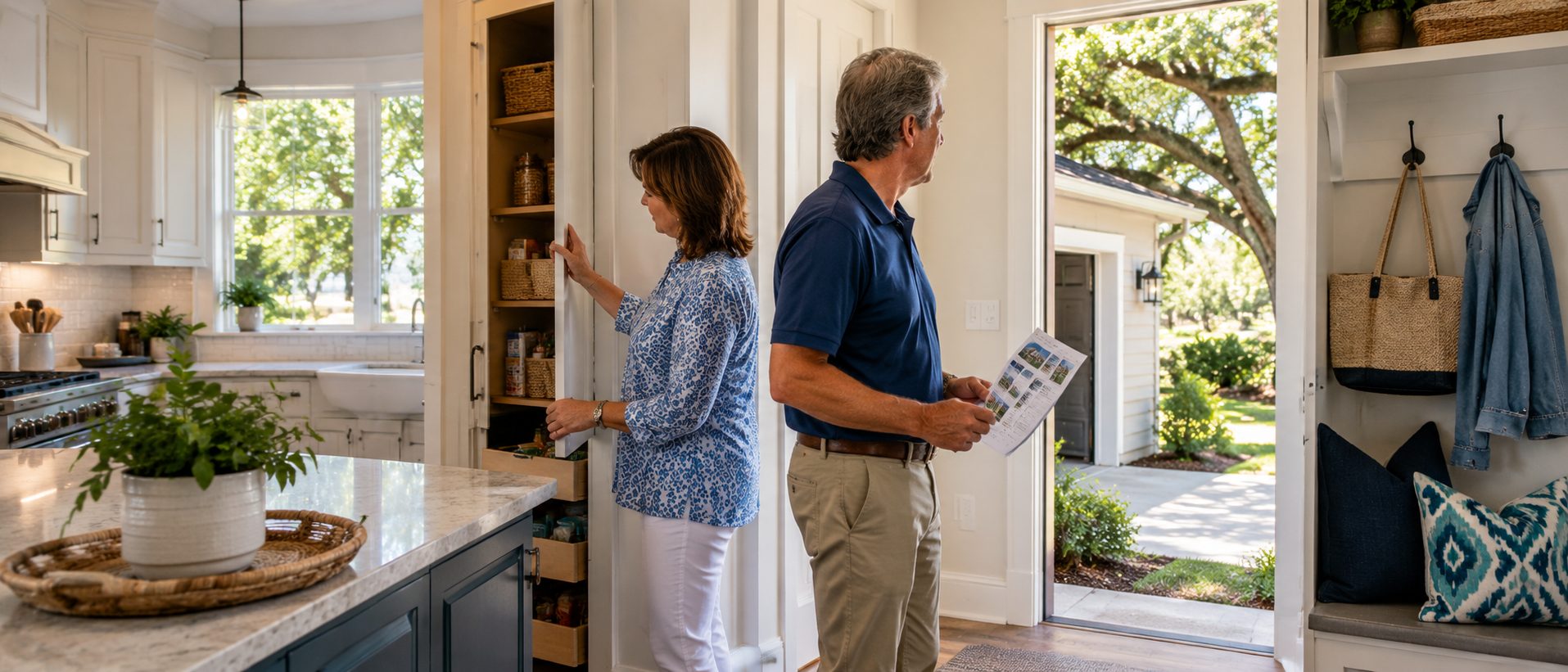
A real estate listing can tell you a lot about a home.
Square footage. Bedrooms. Bathrooms. Lot size. Roof age. HOA fees. Updates. Maybe even whether there’s room for a boat.
All of that matters.
But after years of walking through homes with buyers, I’ve learned that some of the things that matter most don’t fit neatly into a listing description.
They’re the everyday details that determine whether you simply like a house or whether it actually works for the way you live.
Look Past the First Impression
It’s easy to walk into a beautiful kitchen and immediately start imagining yourself there. That’s part of the fun of looking at homes.
But after you’ve taken it all in, take another look.
This time, think about an ordinary Tuesday.
Where will you drop your keys, shoes, backpacks, or work bag when you come through the door?
Can two people comfortably work in the kitchen at the same time?
Is there somewhere to put the vacuum cleaner?
Where will overnight guests sleep?
If everyone is home, is there enough room to be together—and enough room to get away from each other?
Those aren’t glamorous questions, but they’re often the ones that tell you whether a house will work.
Pay Attention to How You Actually Move Through the Home
Floor plans can look perfectly sensible online and feel completely different in person.
As you walk through a home, notice what you’re naturally doing.
Are you squeezing around furniture to get from one room to another?
Does the route from the garage to the kitchen make sense with an armful of groceries?
Is the laundry room somewhere you’ll actually want to use it?
Can you get outside easily from the rooms where you’ll spend the most time?
Is there enough storage where you need it—not just somewhere in the house?
A home doesn’t have to have the perfect floor plan.
It needs to have a floor plan that works for you.
The Neighborhood Is Part of the House
This is especially important around Fort Walton Beach, Shalimar, Niceville, and Destin because two homes that aren’t very far apart on a map can offer very different day-to-day experiences.
An established neighborhood beneath mature oaks in Shalimar feels different from condo living closer to the Gulf in Destin. A home convenient to work and shopping in Fort Walton Beach may solve a completely different problem than one tucked into a quieter Niceville neighborhood.
None of those choices is automatically better.
The question is which one fits your life.
Drive the route you’ll take to work.
Notice the traffic.
Look at where guests would park.
Pay attention to what’s around the house—not just what’s inside it.
If you like to walk, where would you actually walk?
If you spend weekends outside, will the yard be a pleasure or another job on your list?
These little things become big things once you live there.
Waterfront Comes With Its Own Questions
We’re fortunate to have so many different ways to live near the water here.
That might mean a home near a bayou in Shalimar, a waterfront property around Fort Walton Beach or Niceville, or a condo in Destin.
The view may be the first thing you notice.
It shouldn’t be the only thing.
Before deciding that waterfront living is right for you, look at the practical side too:
Insurance costs
Flood considerations
Association or condo fees
Building reserves and assessments, when applicable
Exterior maintenance
Storm preparation
The actual monthly cost of ownership
Sometimes the right answer is absolutely worth it.
Sometimes buyers realize they’d rather live five or ten minutes from the water and enjoy it without taking on everything that comes with owning directly on it.
Both are good answers when they’re informed ones.
Think About the Life You’re Buying For
A home needs to work today, but it’s worth thinking a little farther ahead.
You don’t need to predict your life ten years from now. Nobody can.
But you can ask a few questions.
- Could this home still work if my family changes?
- Will the stairs ever become an issue?
- Is there flexibility for a home office, hobby, guests, or caregiving?
- Am I buying more house—or more yard—than I really want to maintain?
- If my priorities change, will this location still make sense?
This isn’t about finding a “forever home.”
It’s about giving yourself options.
Don’t Let the Checklist Make the Decision for You
I like a good checklist.
Anyone who knows me probably isn’t surprised by that.
But even I know a house can’t be reduced to boxes on a piece of paper.
You can find a home that technically has everything you asked for and still know something isn’t quite right.
You can also walk into a home that wasn’t what you pictured and realize it solves problems you hadn’t thought about.
That’s why I encourage buyers to use their list as a guide—not a set of blinders.
Pay attention to the house.
Pay attention to the neighborhood.
And most importantly, pay attention to your own life.
The Right Home Works After the Showing Is Over
Buying a home is a big financial decision, but it’s also a very practical one.
You’re choosing where you’ll make coffee in the morning, unload groceries, invite people over, spend weekends, deal with laundry, park the car, and come home at the end of a long day.
Those things won’t make the listing highlights.
They may be exactly what makes a home right—or wrong—for you.
If you’re thinking about buying in Fort Walton Beach, Shalimar, Niceville, Destin, or the surrounding area, I’m happy to help you look beyond the listing and think through how a home will actually work for you.
Sometimes the most valuable thing I can point out isn’t a feature.
It’s a question you hadn’t thought to ask.
