

 Facebook
 X
 Pinterest
 Copy Link
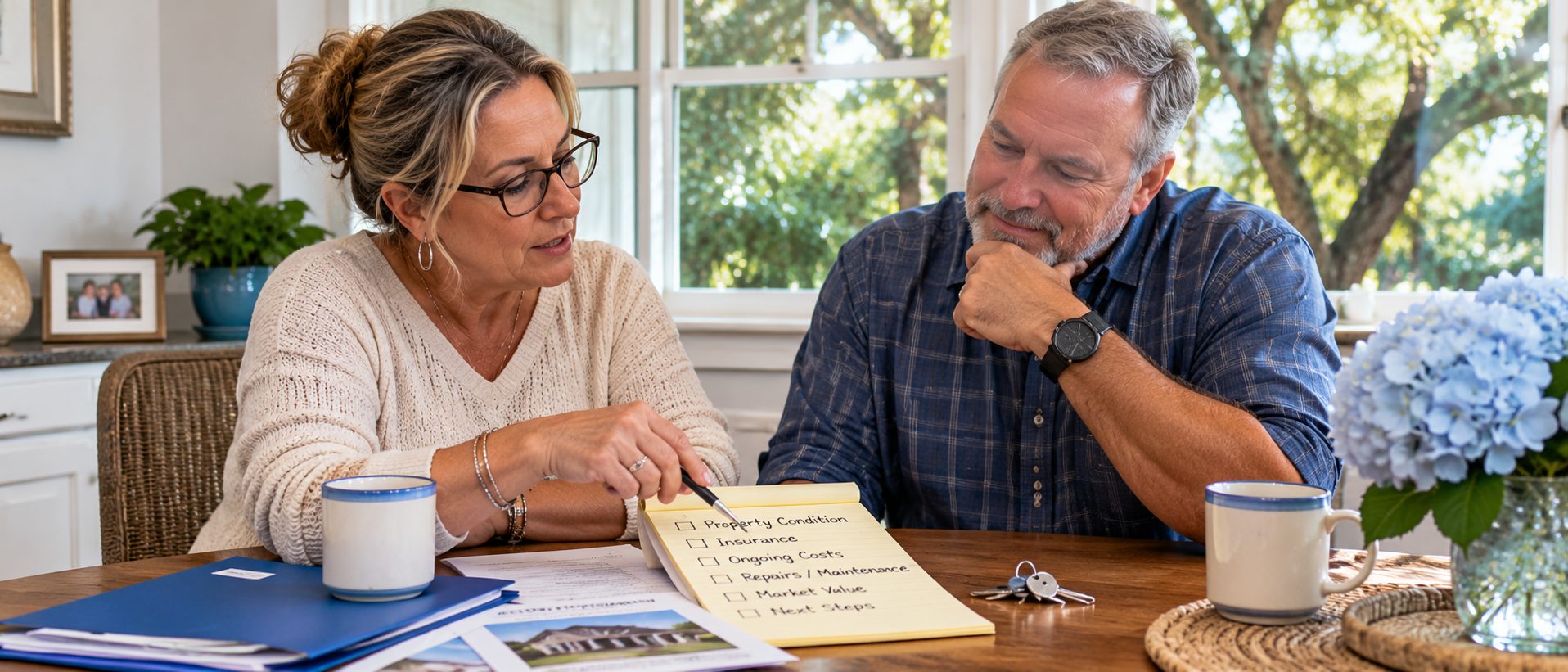
Inheriting a home can bring up a lot of feelings, and not all of them are easy to sort through.
Maybe it’s the house where you grew up. Maybe it belonged to a parent or another family member you’ve recently lost. Or perhaps it’s a property you haven’t visited in years, and now you’re responsible for figuring out what happens next.
There may be memories attached to every room.
There may also be a mortgage payment, insurance bills, maintenance issues, a yard that needs attention, and family members with different opinions about what should happen to the property.
And somewhere in the middle of all that, someone asks, “So, what are we going to do with the house?”
That’s a pretty big question when you’re still trying to understand everything else.
I’ve worked with families and property owners dealing with probate-related real estate, and one thing I always want them to understand is this:
You don’t have to make every decision at once.
There are some things that deserve attention right away. Others can wait until you have better information.
The trick is knowing the difference.
Start With What Needs Attention Now
Before you decide whether to keep, rent, or sell an inherited home, take a look at what’s happening with the property today.
Is anyone living there?
Are the utilities on? Is the insurance still in place? Is the yard being maintained? Is someone checking on the house regularly?
If the property is vacant, who has the keys? Is the home secure? Are there maintenance issues that could become bigger problems if they’re ignored?
These may not be the decisions anyone wants to think about while dealing with a loss, but they’re practical matters that can protect the property while everything else gets sorted out.
I would start with a short list:
Confirm who is responsible for the property right now.
Check that the home is secure and being monitored.
Review insurance coverage and any requirements for a vacant property.
Identify mortgage payments, taxes, association fees, utilities, and other ongoing expenses.
Make note of maintenance concerns that shouldn’t wait.
Find out whether the property is occupied, rented, or vacant.
You don’t need a renovation plan at this point.
You need to make sure the property is being cared for while the larger decisions are considered.
Understand Who Can Make the Decisions
This is one of the most important questions, and it’s also one that can cause confusion.
Just because someone is named in a will or expects to inherit a property doesn’t necessarily mean that person can immediately authorize a sale or make every decision about the home.
Depending on how the property is owned and the circumstances of the estate, there may be a probate process, a personal representative, a trust, or other legal considerations involved.
Florida has its own rules governing these situations.
That’s why I encourage families to work with an appropriate Florida probate attorney to understand who has legal authority, what approvals may be required, and what steps need to happen before the property can be transferred or sold.
My role is on the real estate side.
I can help evaluate the property’s condition, discuss the local market, and explain the practical steps involved in preparing and marketing a home when the appropriate people are ready to make those decisions.
The legal process and the real estate process need to work together, but they aren’t the same thing.
Getting that distinction clear early can prevent a lot of frustration later.
Before You Decide to Sell, Understand What You Have
Sometimes a family assumes a home should be sold because no one plans to live there.
Other times, someone wants to keep it because of the memories attached to the property.
Both reactions are understandable.
But before making a decision, it helps to understand the property’s condition, its potential market value, and what it would cost to keep.
For a home in Fort Walton Beach, Shalimar, Niceville, or Destin, those considerations can vary quite a bit.
An older house in an established neighborhood may have a great location and mature landscaping but need updates or deferred maintenance.
A waterfront property may come with additional insurance, maintenance, or association considerations.
A condominium may have monthly fees, association requirements, and other financial obligations that deserve careful review.
And a home that’s been rented for years may have a different set of preparation needs than one that’s been owner-occupied and carefully maintained.
Before deciding what to do, I like to look at the practical picture:
What is the property’s general condition?
Are there known repairs or maintenance concerns?
What are comparable properties selling for?
What ongoing expenses will the estate or owner need to cover?
Would repairs or improvements make financial sense?
Is anyone interested in keeping the property?
What timeline is realistic, considering both legal and personal circumstances?
You may discover that selling is the most sensible choice.
You may decide that keeping the home is worth exploring.
But either way, you’ll be making the decision with more information.
Not Every Inherited Home Needs a Renovation
I’ve seen properties that needed quite a bit of attention before they were ready to go on the market.
I’ve also seen homeowners worry about improvements that weren’t necessarily worth making.
When a home has been in the family for many years, it’s easy to look around and start making a long list.
The kitchen is dated. The flooring is worn. The bathrooms could use updating. The landscaping needs work.
Before you know it, what started as a discussion about selling the house has turned into a renovation project.
Sometimes that work is justified.
Sometimes it isn’t.
In When a Home Needs Work, How Do You Decide What’s Worth Doing?, I talked about separating necessary repairs from improvements that may or may not justify their expense.
That same approach applies here.
A family doesn’t necessarily need to renovate an inherited property to sell it.
The better question is whether particular improvements are likely to make sense given the property’s condition, the local market, the available budget, and the time involved.
And if the property needs substantial work, selling it in its present condition may be an option worth evaluating.
We want to make decisions that protect the property’s value without spending money unnecessarily.
What If Family Members Don’t Agree?
This can be one of the more difficult parts of dealing with inherited property.
One family member may want to sell quickly.
Another may want to keep the home.
Someone else may believe the house needs extensive improvements before it can be sold.
And sometimes the disagreement isn’t really about the property at all.
It’s about memories, family history, or the feeling that selling the house means letting go of something important.
I don’t think those feelings should be dismissed.
But I also think it helps to separate the emotional questions from the practical ones.
What does the property cost to maintain?
What condition is it in?
What might it reasonably sell for?
What would be involved in keeping it?
And who has the legal authority to make the decisions?
When families have reliable information, it can be easier to discuss their options.
That doesn’t mean everyone will agree.
It does mean the conversation can be based on something more concrete than assumptions.
Where disagreements involve ownership rights, estate administration, or legal responsibilities, those questions need to be addressed with the appropriate attorney.
A real estate professional can help explain property-related considerations, but shouldn’t be expected to resolve family legal disputes.
What If You Don’t Live Nearby?
This is another situation I encounter.
A parent or relative owned a home in Northwest Florida, but the family members responsible for the property now live in another state.
Suddenly, there are questions about keys, utilities, repairs, belongings, contractors, and how to prepare the house for whatever comes next.
And the people making those decisions may be hundreds of miles away.
That’s a lot to coordinate.
In my recent article, Selling a Home When You Don’t Live Nearby: What Needs to Happen First?, I explained how important it is to establish a plan for property access, condition, repairs, communication, and responsibilities.
For an inherited home, those same practical steps may be necessary, with the additional consideration of who is legally authorized to approve the work or sale.
Not everything requires a trip back to Florida.
But some things do require local assistance, and it’s important to know who is handling what.
I’ve helped coordinate property-related details for owners who couldn’t be here themselves.
Sometimes that means helping them identify the next step, communicating with the appropriate professionals, or keeping track of work that’s been approved.
And yes, this is where my fondness for a good spreadsheet can be useful.
When several people are involved, having a clear list of responsibilities and next steps can make a complicated situation much easier to manage.
You Can Make a Plan Without Making Every Decision Today
Here’s what I would encourage anyone dealing with an inherited home to remember.
There are really several different decisions involved.
First, what needs to happen to protect and maintain the property?
Second, what legal or estate matters need to be resolved before decisions can be made?
Third, what are the property’s condition, value, and ongoing costs?
And finally, what makes the most sense for the people involved?
Those questions don’t necessarily need to be answered on the same day.
In fact, trying to answer them all at once can make an already difficult situation feel overwhelming.
Start with what needs attention.
Gather information.
Talk with the appropriate professionals.
Then make the next decision.
You don’t have to have the entire plan figured out before taking the first step.
A Conversation Is a Good Place to Start
If you’ve inherited a home in Fort Walton Beach, Shalimar, Niceville, Destin, or another Northwest Florida community, you may not be ready to decide whether to sell it.
That’s okay.
You may simply need to understand the property’s condition, what it might be worth, or what would be involved if selling eventually becomes the right choice.
I’m happy to help you work through the real estate side of those questions.
We can talk about what you know, identify what information would be helpful, and discuss the practical options available when the appropriate legal authority is established.
No pressure to make a decision before you’re ready.
Sometimes the most helpful thing we can do is figure out what needs to happen next—and leave the rest for another day.
Nance Wendel
REALTOR® | ERA American Real Estate
On It — Practical Real Estate Guidance for Fort Walton Beach & Shalimar
